Starlink Mini vs Standard: Power, Size & Cost Compared
Power draw, weight, Wi-Fi, price and real-world use cases compared from the official spec sheets, so you buy the right Starlink dish once.
Updated October 26, 2026 · By the SatPicker team
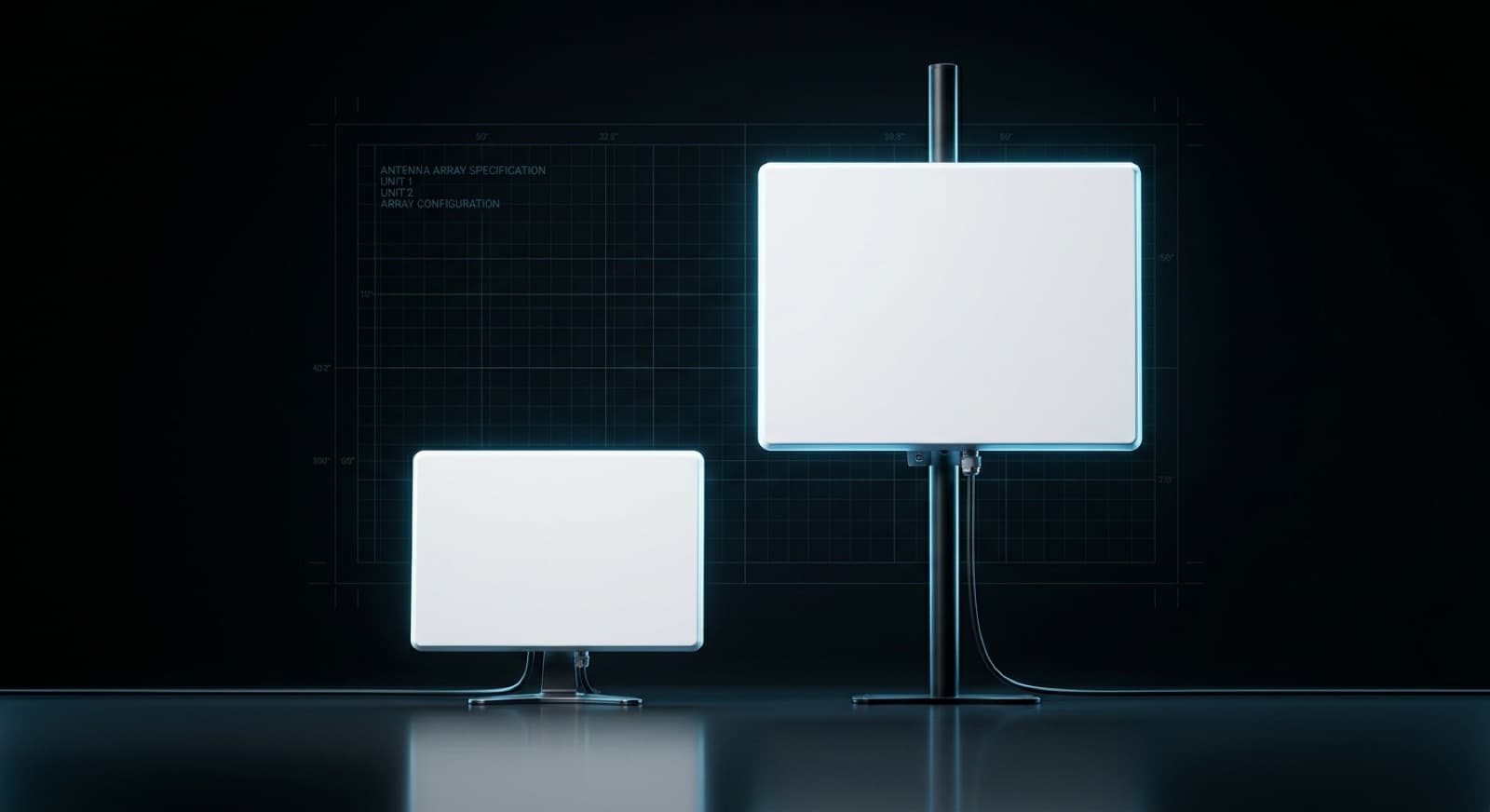
In short
On paper both dishes reach the same satellites. In practice they are built for different lives. One is a backpack-sized dish that runs off a car socket; the other is a home installation with its own router. Buying the one that does not match how you actually use it is the expensive mistake, so start with how you live, not with the price tag.
Side by side: the spec sheets
Every figure below comes from Starlink's specification sheets. Prices are our last check and move with promotions.
| Starlink Mini | Starlink Standard | |
|---|---|---|
| Average power | 25–40 W | 75–100 W |
| Power input | 12–48 V DC, 60 W · USB-C PD 100 W (with accessory) | AC power supply |
| Dish weight | 2.43 lb | 6.4 lb |
| Wi-Fi | Built-in Wi-Fi 5 router, up to about 1,200 sq ft, up to 128 devices | Separate Wi-Fi 6 router |
| Weather rating | IP67 | IP67 |
| Field of view | 110° | 110° |
| Operating temperature | −22 °F to 122 °F | −22 °F to 122 °F |
| Kit price (checked October 26, 2026) | About $199 | About $349 |
Power: the difference that decides most cases
The Mini averages 25–40 W; the Standard averages 75–100 W. On grid power at home that gap barely matters. On a battery it is everything.
Using the same method as our calculator (90% of capacity usable, 90% efficiency on a DC path for the Mini, about 80% through an inverter for the Standard), a 1,024 Wh power station gives:
| Dish | Average draw used | Run time on 1,024 Wh |
|---|---|---|
| Mini (DC) | 30 W | ≈ 27.6 hours |
| Standard (AC inverter) | 85 W | ≈ 8.7 hours |
That is a full day versus a workday. If you camp without hookups, live in a van or want internet during outages, this table alone usually settles it. More detail in sizing a power station for the Mini.
Portability and setup
At 2.43 lb (about 3.4 lb with the kickstand and the 49 ft cable), the Mini goes in a backpack or a door pocket. The router is built in, so there is one box and one cable. The Standard weighs 6.4 lb for the dish alone, comes with a separate router, and is happiest on a pole or roof mount that stays put.
If you move every few days, the Mini wins on hassle alone. If you set up once at a cabin or a house and leave it, the Standard's bulk is a non-issue.
Wi-Fi coverage at home
Starlink rates the Mini's built-in router at up to about 1,200 sq ft and 128 devices. Fine for a van, an RV, a boat or a small apartment. In a two-story house with thick walls, the Standard's separate Wi-Fi 6 router, placed centrally, does a better job. Both work with Starlink's own mesh units; Starlink says the Mini is not compatible with third-party mesh systems.
What the Mini gives up
The Mini is not a free upgrade. Its router is Wi-Fi 5 rather than Wi-Fi 6, it lives inside the dish (so the Wi-Fi source sits wherever the dish has a view of the sky, often outside), and its single Ethernet port uses Starlink's own plug. Starlink also notes that the Mini loses its IP67 rating when you use a standard RJ45 Ethernet cable instead of its dedicated cable.
None of that matters on a campsite. It starts to matter in a house where the dish is on the roof and the living room is two floors down. In that case, honestly, the Standard with its router indoors is the less frustrating setup.
Weather, snow and heat
Both dishes carry an IP67 rating and the same −22 °F to 122 °F operating range. The Mini's sheet lists snow melt up to 1 inch per hour, and that melting is one of the moments its power draw climbs above the average. If you count on a battery in snow country, size the source for the Mini's 60 W rated input, not for 30 W.
Wind matters for the Mini more than its rating suggests, simply because it is light: a dish on a kickstand on a picnic table moves. Use the included mount adapter or a proper pole when you stay more than a night.
Which one fits your situation
| Situation | Pick | Why |
|---|---|---|
| Van life, overlanding, weekend camping | Mini | Battery-friendly, 12 V native, one box |
| RV with solar, part-time travel | Mini | Less battery and panel for the same hours |
| Boat at anchor or on a mooring | Mini | Low draw on the house bank, compact |
| Rural family home, fixed install | Standard | Wi-Fi 6 router, built for permanent mounting |
| Home backup during outages | Either | Mini if you rely on a battery; Standard if a generator covers it |
| Job site or seasonal cabin | Depends | Mini for grab-and-go; Standard if it stays mounted all season |
The plan matters more than the dish
Over a year, the monthly plan costs much more than the hardware. Before buying, check which plans fit your use: Residential for a fixed address, Roam if you travel. Plan availability can depend on the kit and your address, so confirm at checkout. Our Roam vs Residential guide and the plan comparison lay out the current US prices.
Thinking of saving with a second-hand kit instead? Read buying a used Starlink first: a kit still attached to someone else's account is a common trap.
Frequently asked questions
Is the Starlink Mini good enough for a home?
For a small household with modest use, it can be. But the Standard kit has a Wi-Fi 6 router and is built for permanent installation, while the Mini's built-in Wi-Fi 5 router covers up to about 1,200 sq ft according to Starlink. For a family home, the Standard is the more comfortable choice.
How much less power does the Mini use than the Standard?
Starlink lists the Mini at 25–40 W on average and the Standard at 75–100 W. On a battery, that means the Mini runs roughly two and a half to three times longer from the same capacity.
Can the Starlink Mini run on a 12 V battery?
Yes. Its DC input accepts 12–48 V at 60 W, so it can run from a vehicle, RV or boat battery, or from USB-C Power Delivery at 100 W with Starlink's USB-C cable accessory.
Which one is cheaper?
On our last check (October 26, 2026), the Mini kit was listed around $199 and the Standard kit around $349, with promotions moving both. The monthly plan usually costs far more than the hardware over a year, so compare the total with our cost calculator.
Does the Mini have a separate router?
No. The Mini has its Wi-Fi router built into the dish. The Standard kit comes with a separate Wi-Fi 6 router.
Free tool
Starlink true cost calculator
Compare the first-year cost of a Mini or a Standard kit with the plan you have in mind.
SatPicker is independent and not affiliated with SpaceX or Starlink. Specs come from Starlink's official specification sheets; prices are dated and can change — your Starlink checkout is the final word.